Can Coffee Cups Be Recycled or Composted?
A takeaway coffee cup looks simple when it leaves the counter. Paper on the outside, a hot drink inside, a lid pressed down, and a customer on their way.
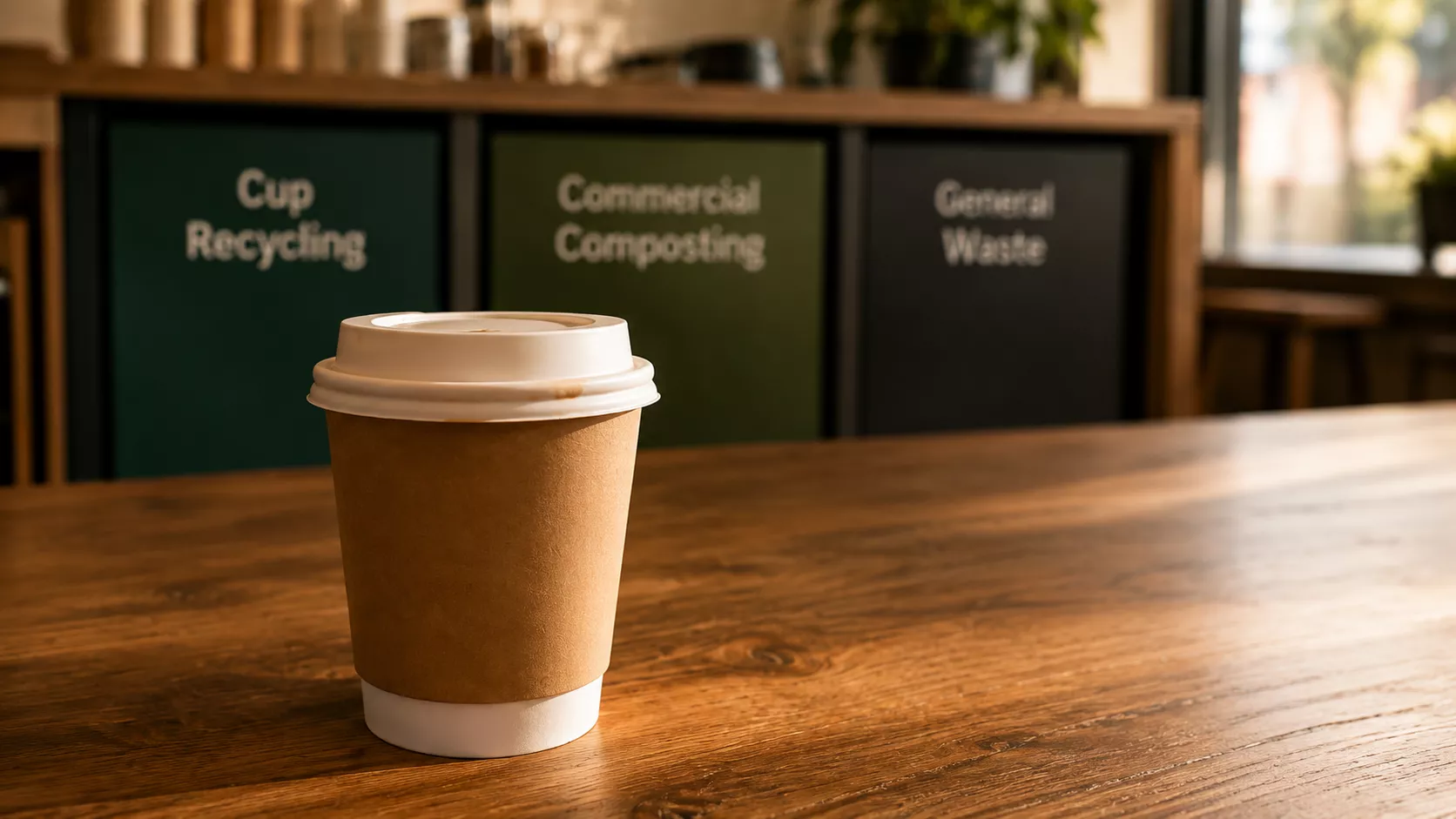
After use, it becomes more complicated. The customer sees a paper cup and may look for a recycling bin. A café team may see a compostable message and look for food waste. A waste contractor sees the full picture: paperboard, a liquid-resistant layer, coffee residue, local collection rules and the sorting system behind the bin.
That is why coffee cup disposal is not a simple yes or no question. Some coffee cups can be recycled. Some can be composted. Some need a dedicated cup collection route. Some should go into general waste if no suitable stream is available.
The material matters, but the disposal route matters too.
The quick answer
Coffee cups can be recycled when they are collected through a suitable paper cup recycling stream. In many cases, that means a dedicated cup recycling bin, a specialist paper cup collection scheme, or a waste contractor that specifically accepts used paper cups.
Coffee cups can be composted when they are certified for composting and accepted by the correct composting route. Most compostable foodservice packaging depends on managed composting conditions unless the product is specifically certified for home composting.
A coffee cup should not be described as simply recyclable or compostable without explaining the conditions. Good disposal guidance should tell people what to do, where to put the cup, and when a route may not be available.
Why coffee cups need more than paper
Plain paperboard is not enough for a hot drink. Coffee is hot, wet and often carried for several minutes before it is finished. Without a functional liquid-resistant layer, the paperboard would absorb moisture, soften and eventually fail.
That layer is where much of the confusion starts. A paper cup may use a PE lining, a PLA lining, an aqueous coating, or another specialist system. These options can look similar from the outside, but they do not behave the same after use.
So the better question is not only “are paper coffee cups recyclable?” It is also “what is the cup made with, and what waste stream is available after use?”
PE-lined coffee cups
PE stands for polyethylene. It is the traditional plastic lining used in many paper coffee cups because it creates a reliable liquid barrier. For busy coffee service, that performance is important. The cup has to hold the drink safely before anything else can be considered.
PE-lined cups are not the same as ordinary paper. The paper fibre and plastic lining need to be separated during processing, which usually requires specialist paper cup recycling infrastructure.
That means PE-lined cups can be recyclable through the right route, but they should not automatically be placed into standard paper or mixed recycling bins. If the local collection system cannot handle them, they may be removed during sorting or treated as contamination.
Where PE-lined cups can work well
PE-lined cups can work well for cafés, offices, venues and foodservice operators with access to a dedicated paper cup recycling stream. They are familiar, widely used and performance-led, but they depend on the correct collection route after use.
PLA-lined coffee cups
PLA stands for polylactic acid. It is a plant-based polymer used in some compostable cups and lids. It can provide the liquid-resistant function needed for hot drinks, but it is usually designed around a composting route rather than a conventional recycling route.
PLA should not be treated as a general disposal answer. A PLA-lined cup should not be assumed to belong in paper recycling, mixed recycling, general waste or a home compost bin unless the product guidance and local waste route support that decision.
Most PLA-lined coffee cups are intended for industrial composting where accepted. Industrial composting uses managed heat, moisture and processing conditions. That is very different from an unmanaged bin or a small home compost heap.
Where PLA-lined cups can work well
PLA-lined cups can be suitable where a site has a waste contractor that accepts certified compostable packaging. They are best used in controlled settings where staff, customers, signage and bins all support the same disposal route.
Aqueous-coated coffee cups
Aqueous-coated cups use a different approach. Instead of a traditional PE or PLA lining, an aqueous coating is applied to support liquid resistance while maintaining cup performance.
This can reduce polymer content compared with traditional linings, but it should still be explained carefully. Aqueous coating does not mean every cup can go into every bin. It does not remove the need for a clear disposal route, and it should not be used as shorthand for unsupported claims.
The practical way to explain aqueous-coated cups is to separate three things: the paperboard, the coating, and the waste stream available after use.
Where aqueous-coated cups can work well
Aqueous-coated cups can be suitable for cafés and food-to-go businesses looking for a lower-polymer cup format with clearer disposal guidance. The right route still depends on local collection, site setup and the instructions provided for that specific cup.
PE, PLA and aqueous coating compared
| Cup type |
What it does |
Typical disposal consideration |
What to check |
| PE-lined cup |
Uses a polyethylene lining to help the cup hold liquid. |
Often needs a dedicated paper cup recycling stream. |
Whether your waste contractor collects PE-lined cups separately. |
| PLA-lined cup |
Uses a plant-based polymer lining, often in compostable cup formats. |
Usually depends on industrial composting where accepted. |
Whether the cup is certified and accepted by your composting provider. |
| Aqueous-coated cup |
Uses an aqueous coating to support liquid resistance and cup performance. |
Depends on the product specification and available waste stream. |
Whether the cup can enter a dedicated cup recycling, composting or other approved route. |
Recycling and composting are different systems
Recycling and composting are sometimes treated as competing answers. In practice, they are different systems with different requirements.
Recycling aims to recover material and return it to use. For paper coffee cups, this often means recovering paper fibre through a process that can handle the cup structure.
Composting aims to break material down under recognised composting conditions. For foodservice packaging, that usually requires a controlled route and clear acceptance from the composting provider.
Both routes can be valid. Both routes can also fail if the cup is placed in the wrong stream. A recyclable cup is not recycled if it goes into general waste. A compostable cup is not composted if it goes into a recycling stream that cannot process it.
Where HONEST fits into the conversation
HONEST™ is built around a simple idea: not perfect solutions, but better information to support better choices.
HONEST™ aqueous-coated paper cups do not use traditional PE or PLA linings. They use an aqueous coating designed to reduce polymer content compared with traditional lined cups, while maintaining the performance needed for hot drinks.
That does not remove the need for clear disposal guidance. It makes the guidance more important. HONEST cups are supported by disposal guidance for different waste-stream scenarios, but the correct route still depends on what is available at the point of disposal.
Where a dedicated paper cup recycling stream is available, use that route. Where commercial composting is clearly accepted, follow the site guidance. Where home composting is supported for the specific product, use the wording: certified home compostable when composted under recognised home composting conditions.
If no clear cup recycling or composting route is available, general waste may be the most appropriate option to avoid contaminating another waste stream.
Why local infrastructure changes the answer
Two cafés can use similar cups and still have different disposal outcomes.
One café may have a dedicated paper cup recycling bin and a waste contractor that collects cups separately. Another may only have dry mixed recycling and general waste. A third may operate inside a station, venue or office where the landlord controls the waste streams.
The same cup can therefore follow different routes depending on the system around it. That is why responsible cup selection starts with both the material and the disposal setup.
What cafés should ask before choosing cups
Before changing cup type, ask your waste contractor or site manager:
- Do you collect paper coffee cups separately for recycling?
- Do you accept PE-lined paper cups?
- Do you accept PLA-lined compostable cups?
- Do you accept aqueous-coated paper cups?
- Can compostable packaging go into the same stream as food waste?
- Which certifications do you require for compostable packaging?
- Can you provide customer-facing bins or disposal signage?
- What happens to the cups after collection?
These questions are more useful than broad material claims. They connect the cup choice to the real disposal route available to your business.
What to say to customers
Customer-facing disposal wording should be calm, specific and easy to follow. The aim is to help people make the right choice quickly.
Useful wording includes:
- Use a dedicated cup recycling bin where available.
- Recycle where suitable facilities exist.
- Commercially compostable where accepted by your waste provider.
- Certified home compostable when composted under recognised home composting conditions.
- If no clear route is available, use general waste to avoid contaminating recycling.
Less useful wording includes:
- Fully recyclable, without explaining the required route.
- Compostable, without explaining whether this means commercial or home composting.
- General claims that do not explain what the customer should do with the cup.
How to choose the right coffee cup for your business
Start with the drink. A hot black coffee, flat white, tea, hot chocolate and soup sample all place different demands on a cup. The cup needs to perform safely and consistently during service.
Then look at the waste route. If your site has a dedicated cup recycling collection, choose a cup that fits that route. If your waste contractor accepts certified compostable packaging, a compostable option may be suitable. If you are looking for a lower-polymer format with clear disposal guidance, aqueous-coated cups may be worth considering.
For many cafés, the right answer will not be one material across every situation. It may be a practical mix of cup types, lids, staff guidance and customer-facing signage that reflects how the business actually operates.
The bottom line
Coffee cups can be recycled or composted, but not by default.
PE-lined cups, PLA-lined cups and aqueous-coated cups are different formats with different disposal considerations. The right choice depends on the cup specification, the drink, the site setup and the waste stream available after use.
The most useful approach is not to overstate the claim. It is to choose the right cup, give clear disposal guidance, and support customers in making an informed choice.
Explore Agora’s hot cups, HONEST™ aqueous-coated cups and cup lids to compare practical options for your café, takeaway or food-to-go business.
FAQs
Are paper coffee cups recyclable?
Some paper coffee cups are recyclable, but many need a dedicated paper cup recycling stream rather than standard paper recycling. The answer depends on the cup construction and the collection route available after use.
Can compostable coffee cups go in food waste?
Only where the food waste or composting provider clearly accepts that packaging type. Compostable packaging should not be placed into a food waste stream without checking site guidance first.
What is a PE-lined coffee cup?
A PE-lined coffee cup is a paper cup with a polyethylene lining that helps the cup hold liquid. PE-lined cups often require specialist paper cup recycling where available.
What is a PLA-lined coffee cup?
A PLA-lined coffee cup uses polylactic acid, a plant-based polymer, to provide liquid resistance. PLA-lined cups are usually linked to composting routes where the correct facilities and certifications are in place.
What is an aqueous-coated coffee cup?
An aqueous-coated coffee cup uses an aqueous coating to support liquid resistance and cup performance. It is different from a traditional PE or PLA lining, but it still needs clear disposal guidance based on the available waste stream.
Are HONEST cups home compostable?
HONEST cups should follow the disposal guidance available for the specific product and site. Where home composting is referenced, the correct wording is: certified home compostable when composted under recognised home composting conditions.
What should a café do if there is no cup recycling bin?
If no clear cup recycling or composting route is available, general waste may be the most appropriate option. This helps avoid contaminating recycling or composting streams that cannot process the cup.