Every café owner knows the feeling: you've perfected your espresso recipe, trained a strong team, found a brilliant location — and yet something is still missing. Customers walk in, order their drink, and leave without a second glance. No social media post, no word-of-mouth recommendation, no return visit booked.
More often than not, the missing link isn't the coffee. It's the cup it comes in.
Packaging is one of the most underused and undervalued marketing tools available to café and coffee shop owners. Unlike a paid social media ad that disappears after a few seconds, or a leaflet that ends up in the nearest bin, packaging travels. It sits on desks, gets carried down high streets, appears in photos, and sparks conversations. Done well, it is a 24-hour ambassador for your brand — one that your customers actively pay for.
This article makes the case for treating packaging not as a cost of business, but as one of your highest-return marketing investments.
First Impressions Are Formed in 90 Seconds
Research consistently shows that consumers form their first impression of a product within 90 seconds — and that between 62% and 90% of those snap judgements are based on colour alone. For a café, your packaging is often the first branded touchpoint a new customer encounters, even before they've tasted your coffee.
Consider what happens the moment someone walks in and picks up a cup. If that cup is plain white with a stock logo stamp, the implicit message is that your café is functional. If it's a thoughtfully designed vessel — the right weight, the right feel, your brand colours, a considered font — the message is that your café has a point of view. That you care about the details. And if you care about the details of your packaging, customers naturally assume you care about the details of your coffee.
This is not a superficial effect. A 2024 study found that nearly 70% of consumers have, at least sometimes, based their purchasing decisions solely on packaging. Across all sectors, 72.5% of consumers report that packaging design directly influences what they buy. For a market as tactile and sensory-driven as coffee, these numbers are likely even higher.
Your cup, your takeaway bag, your napkin — they are selling before you've said a word.
Your Cup Is a Moving Billboard
Think about the journey a coffee cup takes after it leaves your counter.
It travels from your café to the office, the park bench, the school run. It sits on a desk for an hour during a meeting. It gets photographed and posted to Instagram. It's carried past hundreds of people on a busy morning commute. No other form of advertising achieves that kind of organic reach without a single additional pound of spend.
This is sometimes called the "walking billboard" effect, and for coffee shops specifically, it is extraordinarily powerful. In a city centre or busy high street, a distinctive, well-designed cup acts as a constant, visible reminder of your brand to everyone who walks past the person holding it.
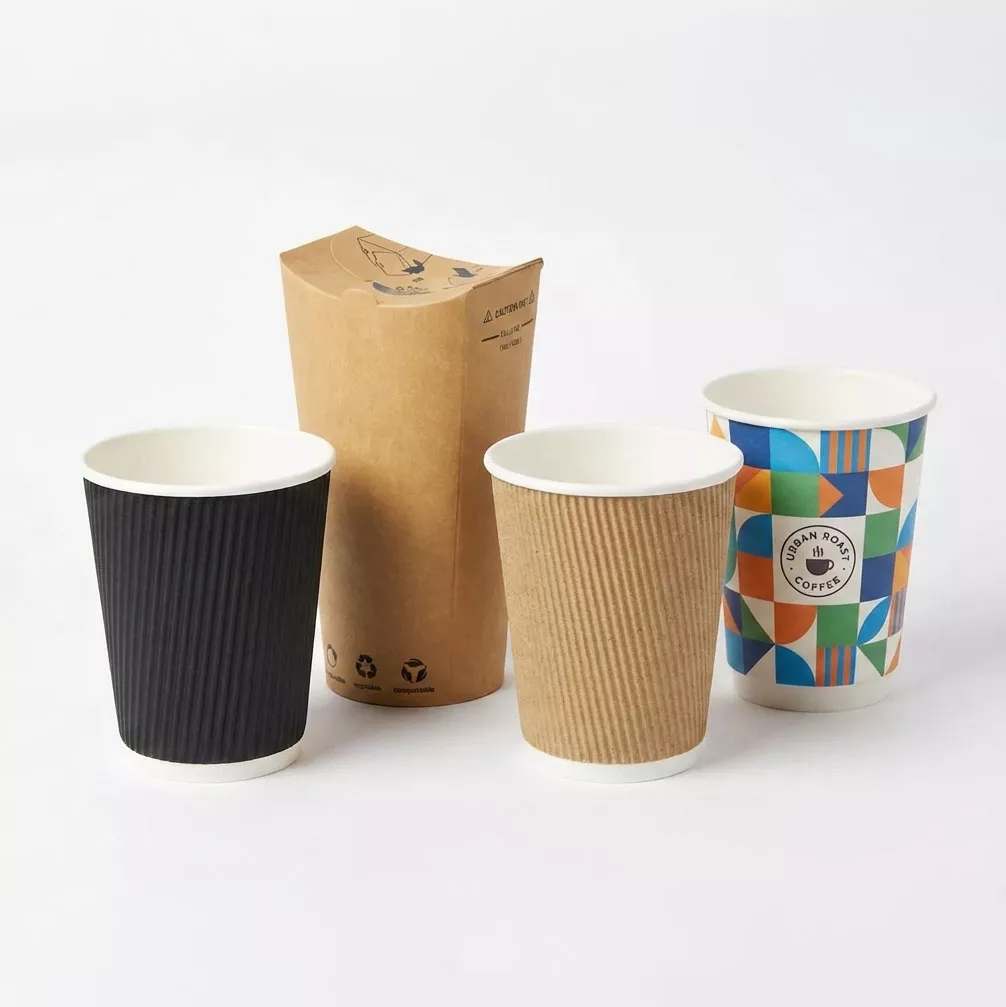
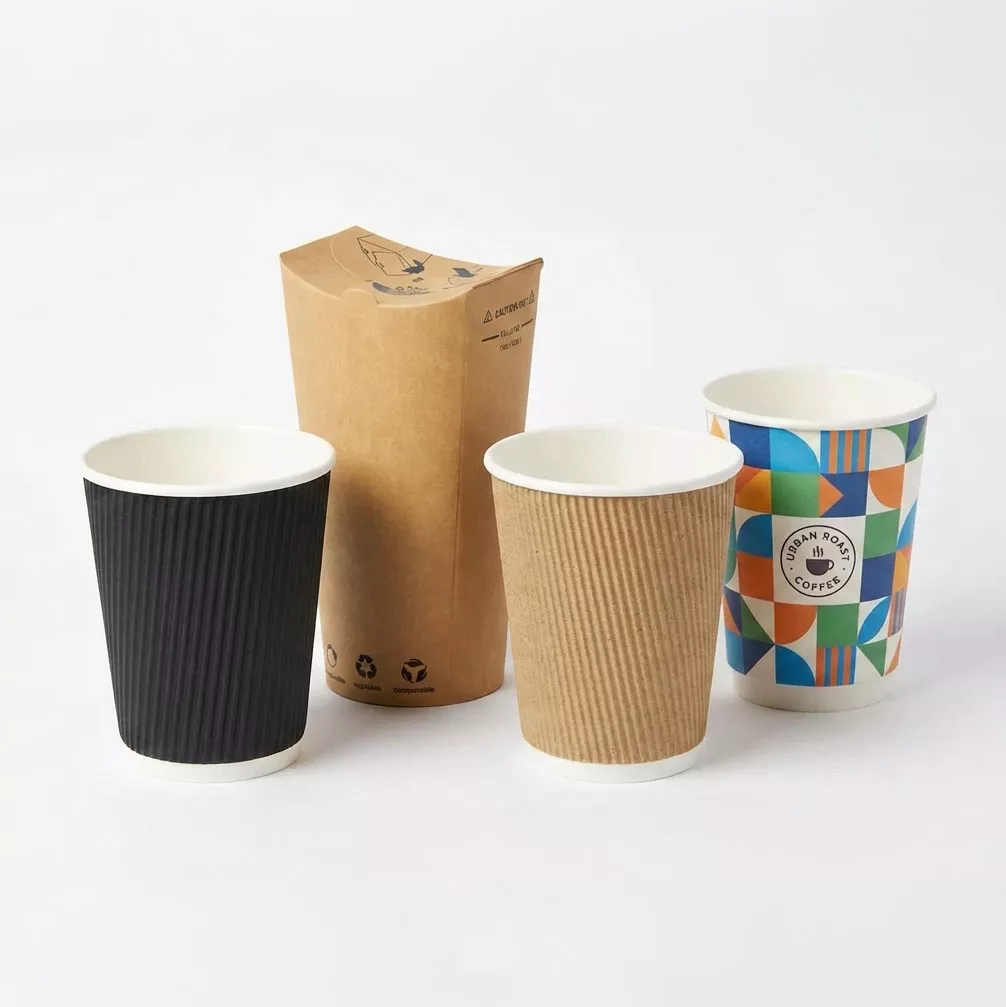
The most direct way to harness this effect is through custom printed cups — your logo, your colours, your brand identity on every single drink that leaves your counter. A custom print doesn't just look professional; it turns every takeaway order into a piece of paid-for advertising that works long after the coffee is finished.
The strategic implication is clear: the more cups you sell to go, the more impressions your brand generates, entirely for free. Investing in better-designed takeaway packaging is not a luxury — it is a direct extension of your marketing budget.
Consistency Builds Recognition, and Recognition Builds Trust
Brand recognition is built through repetition. The more consistently a visual identity appears — the same colour, the same logo placement, the same feel — the more memorable and trustworthy a brand becomes.
For many independent cafés, packaging is the single most consistent branded touchpoint they have. Your team changes. Your seasonal menu changes. Even your interior may evolve. But the cup your customer holds every morning stays the same — and that consistency does quiet, persistent work in building the feeling that your café is a reliable, established part of their routine.
The research bears this out: 70% of consumers say brand trust is "very important" in their purchasing decisions. Trust is not built through a single brilliant campaign. It is built through hundreds of small, consistent encounters with your brand identity. Every cup you serve is one of those encounters.
Mismatched or inconsistent packaging — white cups with one logo, different bags with another design, plain napkins — quietly undermines this effect. Cohesion across every touchpoint, including the packaging customers take away with them, signals professionalism and permanence.
Sustainability Is Now a Marketing Differentiator
The café sector has faced significant scrutiny over disposable packaging waste, and customers are increasingly paying attention to how their favourite coffee shop responds. The UK's Simpler Recycling legislation came into effect in March 2025, requiring businesses to separate food waste — signalling a broader direction of travel for environmental responsibility.
For café owners, this presents a genuine marketing opportunity.
When a customer picks up a cup made from sustainably sourced board, lined with plant-based materials, paired with a compostable lid, the message is immediate and powerful: this café stands for something beyond profit. That resonates — and it sticks. A 2024 survey found that 55% of consumers expect businesses to prioritise sustainable packaging, and 44% say that sustainable packaging positively influences their decision to make a repeat purchase.
This means that upgrading to compostable or eco-certified packaging is not simply an ethical decision. It is a commercial one. Cafés that visibly lead on sustainability attract a more loyal customer base, generate stronger word-of-mouth referrals, and are increasingly preferred by corporate clients for office catering contracts.
Eco packaging works hardest when it's communicated. A small note on the cup — "Made from sustainably sourced materials" — transforms a packaging choice into a brand statement. Your customers notice, and they remember.
The Instagram Effect: Packaging That Gets Shared
Social media has changed the economics of packaging in a way that was impossible to predict even a decade ago. A well-designed cup, a thoughtfully wrapped sandwich, a beautifully presented takeaway bag — these are now social media content. And that content reaches audiences that your paid advertising budget could never touch.
The "Instagrammable" quality of a café is now explicitly a factor in where younger customers choose to go. Gen Z, in particular — the fastest-growing consumer segment in the café market — actively seeks out brands whose aesthetics are worth sharing. Bold colour choices, distinctive design, a clever bit of copy on the side of the cup: these are the details that convert a one-time customer into a free brand ambassador with thousands of followers.
A great example of packaging that earns its place on a feed is The Good Cup — a range designed specifically to stand out. With its distinctive kraft aesthetic and bold design identity, it's the kind of cup that customers photograph, share, and remember. For cafés that want packaging to do more than hold a drink, it's exactly the kind of product worth considering.
This does not always require a fully bespoke custom print run. It requires a coherent design language across your packaging — a consistent colour palette, thoughtful typography, and materials that photograph well. The difference between packaging that gets photographed and packaging that doesn't is often a single design decision made at the sourcing stage.
Packaging Signals Your Price Point — and Your Permission to Charge It
There is a direct relationship between the quality of your packaging and the price your customers are willing to pay for what's inside it.
Research from the coffee sector shows that premium packaging — heavier weight, matte finishes, clean typography — makes consumers perceive the product itself as higher quality, and makes them more willing to pay a premium price. This is not irrational behaviour. It is a rational shortcut: if a business has invested in quality packaging, it is signalling that it has also invested in quality product.
For independent cafés competing against branded chains, this effect is particularly important. The packaging your customer holds is part of the argument you are making that your coffee is worth more than the equivalent at the café next door. Cheap, generic packaging inadvertently undermines that argument, no matter how good the coffee actually is.
This is why premium independent cafés rarely compromise on packaging, even when they are watching costs closely elsewhere. The return — in both perceived value and actual price tolerance — is measurable. Whether that means investing in custom printed cups that carry your brand identity, or choosing a distinctive off-the-shelf range like The Good Cup, the principle is the same: the quality of the vessel communicates the quality of the drink.
Practical Steps for Café Owners
If packaging is already on your radar but you're not sure where to start, the following steps provide a structured approach.
Audit what you're currently using. Lay out every piece of packaging you use — cups, lids, bags, napkins, takeaway containers — and ask honestly whether they collectively communicate a coherent brand. Do they feel intentional, or generic?
Identify your highest-visibility items. For most cafés, the takeaway cup is the single most important packaging decision because it travels furthest and gets seen by the most people. Prioritise this first. If budget allows, custom printed cups offer the strongest return on that investment.
Choose materials that match your brand values. If sustainability is important to your café's identity, your packaging should reflect that — compostable cups, fibre lids, recycled-content bags. Misalignment between stated values and actual packaging is noticed by customers.
Think about consistency across the full range. Your hot cup, cold cup, bag, and napkin should feel like they belong to the same family. Colour palette, print style, and material quality should be consistent.
Consider the details that customers touch. Weight, texture, the way a lid fits — these tactile qualities register subconsciously and contribute to the overall brand experience. A flimsy lid that leaks is not just a functional failure; it is a brand impression.
The Bottom Line
For café and coffee shop owners, packaging is not a procurement decision. It is a marketing decision — one with the potential to build brand recognition, drive social media reach, signal quality, reinforce sustainability credentials, and justify premium pricing, all simultaneously.
The cups, bags, and containers your customers leave with are your brand in the world beyond your four walls. They are working for you — or against you — every minute they are in a customer's hands.
The question is not whether you can afford to invest in better packaging. It is whether you can afford not to.
Agora Food Packaging supplies cafés and food businesses across the UK with a full range of cups, lids, takeaway containers, eco-certified packaging, and hygiene essentials. Explore our custom printed cups and The Good Cup range, or browse our full catalogue at agorafoodpackaging.com.